

You’re scrolling through a group chat when someone drops a comment, then tacks on “JS” at the end. No explanation. Just two letters, sitting there like a little verbal shrug. Is it an opinion? A jab? Something coding-related that got mixed into a casual conversation by mistake? If you’ve paused to figure it out, you’re in good company. This tiny abbreviation shows up constantly across texts, comments, and DMs, yet plenty of people use it (or receive it) without ever pinning down exactly what it means.
Here’s the good news: once you understand the logic behind “JS,” you’ll never second-guess it again. Let’s break it down from every angle, meaning, origin, real-world use, so you can read it, use it, and reply to it with total confidence.
Quick Answer

In texting, “JS” almost always means “Just Saying.” People use it to soften an opinion, add a casual thought, or gently point something out without sounding harsh. There’s also a completely unrelated meaning floating around: “JS” as shorthand for JavaScript, the programming language. Context tells you which one you’re dealing with.
What Does JS Stand For?
At its core, “JS” stands for Just Saying. It’s a small verbal cushion, a way of tossing out an opinion or observation while dialing down the intensity behind it. Think of it as the texting version of shrugging your shoulders after you say something a little blunt.
People typically drop it at the end of a sentence, almost like a disclaimer. It tells the reader, “Take this or leave it, I’m not trying to start anything.” Here’s what that looks like in practice:
- “You should probably leave earlier next time, JS.”
- “That restaurant’s better on weekdays, JS 😄“
- “Not gonna lie, that outfit’s a bit much, JS.”
Notice how each sentence would feel sharper without the “JS” tacked on. That’s the whole function of this abbreviation. It takes the edge off.
Where Did JS Come From?
Long before texting existed, people said “just saying” out loud all the time, usually right after voicing an opinion they weren’t fully committed to defending. It’s one of those verbal habits that’s been baked into casual English conversation for generations.
Once texting took off in the early 2000s, shorthand became the norm. Character limits on old flip phones and the sheer effort of typing on a numeric keypad pushed people toward abbreviating everything they possibly could. “Just saying” got trimmed down to “JS” somewhere along the way, right alongside other classics like “LOL” and “BRB.”
What’s interesting is that “JS” never really faded, even as texting technology improved dramatically. A few reasons explain its staying power:
- It saves time without losing meaning
- It sounds casual and non-confrontational
- It softens statements that might otherwise land as blunt or critical
- It fits naturally into fast-paced social media culture
While flashier slang terms come and go with each new app trend, “JS” has quietly stuck around because it solves a specific communication problem: how do you say something honest without sounding like you’re picking a fight?
How to Tell What JS Actually Means
Here’s where context becomes your best friend. Reading “JS” in isolation tells you almost nothing. Reading it inside a full sentence tells you everything.
If someone’s sharing an opinion, giving unsolicited advice, or making an observation, “JS” is doing its usual job: Just Saying. But if the conversation revolves around coding, websites, or app development, that same abbreviation probably means something else entirely. JavaScript conversations don’t usually blend well with casual chit-chat, so the surrounding topic is your biggest clue.
Tone matters just as much as subject matter. A message like “You should probably rethink that, JS” can read as helpful or a little judgmental, depending entirely on:
- The words surrounding it
- Whether an emoji softens the delivery
- Your relationship with the person texting you
- The overall vibe of the conversation up to that point
A friendly emoji at the end changes everything. Compare “You missed the deadline, JS 😅” to “You missed the deadline, JS.” Same words, completely different emotional temperature.
JS in a Sentence: Real Examples
Since context is everything, here’s a range of examples showing how flexible this little abbreviation actually is:
- “That movie was kind of a letdown, JS 🎬”
- “You should probably double-check your numbers before sending that, JS.”
- “He didn’t seem too into the plan, JS 👀”
- “Honestly, the blue one looks better on you, JS 😊”
- “Maybe don’t wait until the last minute next time, JS.”
- “Yeah, that was definitely an interesting choice… JS 🙃”
Notice how the tone shifts from supportive to mildly sarcastic depending on wording and punctuation. That flexibility is exactly why “JS” has remained so popular across texting and social platforms alike.
How People Use JS Across Texting and Social Media
Whether you’re scrolling through WhatsApp, replying to an Instagram comment, or dropping a quick thought on TikTok, “JS” functions the same way everywhere. The meaning doesn’t shift from platform to platform, though the setting where you’ll encounter it does follow a pattern.
You’ll see it constantly in:
- Casual group texts between friends
- Instagram comments and DMs
- TikTok comment sections, especially opinion-based ones
- Snapchat conversations, often paired with emojis for extra tone clarity
You’ll rarely spot it in:
- Formal emails
- Professional Slack channels
- Customer service messages
- Any context where clarity matters more than casualness
If you do see “JS” pop up in a workplace chat, it usually signals a pretty relaxed, informal team culture rather than a strict corporate tone.
When JS Means Something Completely Different
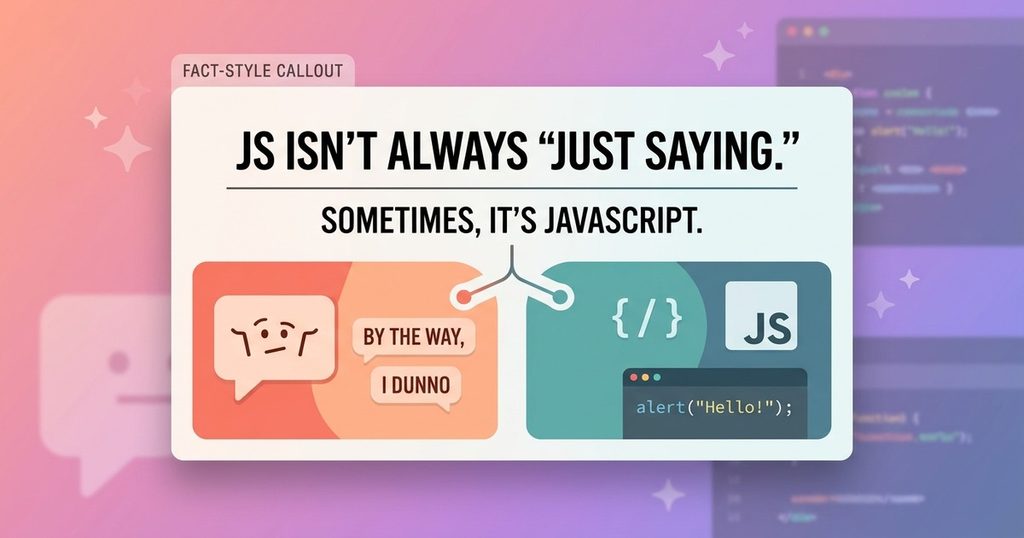
Step outside casual texting, and “JS” picks up a few other identities entirely:
- JavaScript – a widely used programming language that powers much of the interactive web
- Job Safety – occasionally used in workplace or safety training contexts
- Journal System – sometimes referenced in academic or technical writing
Here’s a simple rule of thumb: if the conversation has nothing to do with opinions, casual advice, or lighthearted comments, “JS” is probably not standing in for “Just Saying.” Context always wins.
Similar Abbreviations Worth Knowing
“JS” doesn’t operate alone. It belongs to a whole family of texting shorthand that softens or clarifies tone in similar ways:
- IMO (In My Opinion) – more formal-sounding, often used to preface a stronger stance
- TBH (To Be Honest) – more direct, signals you’re about to say something candid
- FYI (For Your Information) – informational rather than opinion-based, no softening involved
While these all serve related purposes, “JS” tends to feel the most casual and low-stakes of the bunch. It’s less about stating a firm opinion and more about tossing a thought out there without much weight attached.
How to Reply When Someone Says JS
Replying to “JS” doesn’t require much effort, which is honestly part of its charm. Depending on how you feel about what was said, here are a few natural responses:
- If you agree: “Yeah, fair point 👍”
- If you’re neutral: “Hmm, maybe.”
- If you disagree: “I don’t know about that 😅”
- If you want more context: “What makes you say that?”
Matching your reply’s tone to theirs keeps the conversation flowing naturally, without turning a casual comment into a bigger discussion than it needs to be.
Is JS Rude or Just Casual?
By itself, “JS” isn’t rude. It’s neutral, closer to a verbal shrug than a jab. But timing and delivery can shift how it lands.
Here’s when it usually feels fine:
- After a lighthearted observation
- Alongside a friendly emoji
- In a conversation where opinions are already being exchanged casually
And here’s when it might come across as dismissive:
- Right after criticizing someone directly
- With zero softening tone or emoji
- In a conversation that’s already tense or serious
The abbreviation itself carries no built-in attitude. The way you frame it does all the heavy lifting.
Is JS Still Popular in 2026?
Yes, and it’s not going anywhere anytime soon. While flashier slang terms rotate in and out of relevance every few months, simple, function-driven abbreviations like “JS” tend to stick around because they solve a real communication need rather than chasing a trend.
It remains popular because it’s:
- Quick to type
- Easy for almost anyone to understand
- Useful across a wide range of casual conversations
- Familiar enough that it never feels forced or outdated
Newer slang might dominate headlines, but “JS” continues doing quiet, reliable work in everyday texting.
Frequently Asked Questions
What does JS mean in texting?
It typically means “Just Saying,” used to share a casual opinion or observation without sounding too forceful.
Is JS the same as being rude?
Not inherently. It’s neutral by default, though tone and context can shift how it’s received.
Does JS always mean “Just Saying”?
In casual texting, yes, almost always. Outside that context, especially in tech or workplace settings, it can mean something entirely different.
What does JS mean in programming or work contexts?
It usually refers to JavaScript, a programming language, or occasionally “Job Safety” in workplace settings.
How can I tell which meaning of JS someone intends?
Look at the topic of conversation, the tone, and whether emojis are involved. Casual chats about opinions almost always point to “Just Saying.”
Final Thoughts
“JS” might only be two letters, but it carries a surprising amount of nuance once you actually break it down. It softens opinions, keeps conversations light, and gives people an easy way to say what they think without sounding overly critical. It’s a small piece of digital shorthand that says a lot about how casual communication has evolved.
Next time you spot “JS” at the end of a text, you’ll know exactly what’s behind it, and you might even start using it a little more intentionally yourself.

Eddie Brock is an experienced blogger and the creative voice behind Phrase Nook. With a passion for words, ideas, and engaging storytelling, he brings thoughtful perspectives and practical insights to every post. Eddie enjoys exploring diverse topics, connecting with readers, and turning everyday experiences into meaningful stories. His writing aims to inform, inspire, and keep readers coming back for more.